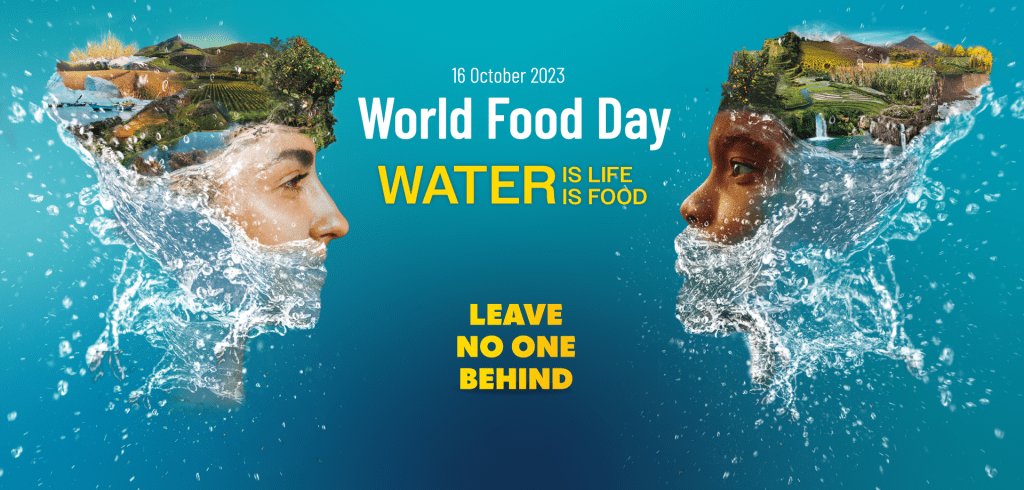
This post is a little overdue but life happens… let’s explore this year’s theme “Water is Life, Water is Food Leave No One Behind”.
It is a fact that Millions go to bed hungry every night, they do no have access to food and they do not have access to water or that water source is not clean or potable. Many are from African countries but many more around the world especially those who live in extreme poverty experience this. World Food Day, is an annual reminder of the need to combat hunger and malnutrition while promoting sustainable agriculture. This year’s theme highlights the pivotal role of water in food security and the pressing need to ensure equitable access to this life-sustaining resource.
Let’s Dive Right into The Persistent Problem – Global Hunger
Despite the considerable progress in various aspects of human development, global hunger remains a stark reality. According to the United Nations’ latest estimates, nearly 9% of the world’s population—approximately 690 million people—go to bed hungry every night. This harrowing statistic is exacerbated by numerous factors, including conflict, climate change, economic disparities, and inequalities in access to resources, particularly water.
Water, the Essence of Life
Water is often referred to as the “essence of life,” and for good reason. It’s one of the most fundamental elements for sustaining all living organisms, and without it, life as we know it would cease to exist. When it comes to agriculture, water assumes an even more critical role.
Agriculture is the largest consumer of fresh water worldwide, accounting for approximately 70% of all withdrawals. As the global population continues to expand, the demand for food and water intensifies. Agriculture not only relies on substantial amounts of water for irrigation but also requires it for the growth and sustenance of crops and livestock.
While water is essential for food production, there exists a stark disparity in access to this resource. Many regions around the world, particularly in Sub-Saharan Africa and parts of Asia, face water scarcity and inadequate infrastructure for water management. In these areas, communities struggle to secure sufficient water for their daily needs, let alone for irrigation or livestock.
The challenges of water scarcity are further compounded by climate change, which is leading to more frequent and severe droughts, altering precipitation patterns, and making water resources increasingly unpredictable. In such conditions, food security becomes increasingly fragile, and vulnerable populations face heightened risks of hunger and malnutrition.
The Role of Sustainable Agriculture in Water and Food Security
Sustainable agriculture practices play a vital role in addressing the complex issues of water and food security. These practices are designed to maximize food production while minimizing the environmental impact and resource consumption. They include techniques such as drip irrigation, crop rotation, organic farming, and agroforestry, which can help conserve water, reduce the use of chemicals, and enhance soil health.
Sustainable agriculture is not just about producing food; it is about producing food in a way that ensures the long-term health of our planet and its inhabitants. It promotes the responsible use of water resources and encourages the preservation of ecosystems that are critical for water supply, such as forests and wetlands.
Innovations in Water-Efficient Agriculture
In the quest to secure food for a growing global population while minimizing water use, innovative agricultural practices and technologies are emerging as powerful tools. These innovations not only reduce the water footprint of agriculture but also enhance crop yields and overall food security. Some of the notable innovations include:
- Drip Irrigation: Drip irrigation systems deliver water directly to the root zones of plants, minimizing wastage and optimizing water use.
- Precision Agriculture: Using data and technology, precision agriculture helps farmers make informed decisions about planting, irrigation, and harvesting, improving resource efficiency.
- Desalination: In water-scarce regions, desalination technologies are being used to turn seawater into fresh water for agriculture.
- Rainwater Harvesting: Collecting rainwater for agricultural use is a traditional practice that is being revived and modernized to augment water resources in arid regions.
- Climate-Resilient Crops: Scientists are developing crop varieties that can thrive in challenging environmental conditions, including drought-resistant and flood-tolerant crops.
The Caribbean and the Importance of Water in Agriculture
As always this blog seeks to shed light on the experiences in the The Caribbean region. Our unique climate and geographical features show the intricate relationship between water and food. The Caribbean, is often associated with tourism. However, agriculture remains a crucial economic sector in many Caribbean countries, and it is deeply intertwined with the availability and management of water resources.
- Irrigation: Many Caribbean islands experience irregular rainfall patterns. This makes irrigation essential for crop cultivation. Proper water management ensures that crops receive the necessary moisture, mitigating the risks associated with prolonged droughts or erratic rainfall.
- Crop Diversity: The Caribbean’s tropical climate allows for diverse crops to flourish, from staples like rice, yams, and sweet potatoes to tropical fruits like bananas, mangoes, and papayas. All these crops require a reliable water supply for optimal growth and yield.
- Water Scarcity Challenges: Several Caribbean countries grapple with water scarcity, aggravated by factors such as climate change and increased competition for water resources. Sustainable water management practices are crucial to ensuring a consistent food supply. Water scarcity in the Caribbean is not uniform and varies from one island to another. The challenges in ensuring access to this precious resource are often amplified by the following factors:
- Climate Change: Rising sea levels and increased hurricane intensity, both linked to climate change, pose threats to freshwater sources in low-lying coastal areas.
- Limited Freshwater Sources: Many Caribbean islands rely heavily on limited freshwater sources, which are vulnerable to contamination and over-extraction.
- Inadequate Infrastructure: Insufficient infrastructure and outdated water distribution systems hinder efficient water use.
- Competition for Resources: The competition for water resources between agriculture, tourism, and domestic use can lead to conflicts and inequitable access.
The Way Forward: Water, Food, and Sustainability
As we observe World Food Day 2023 and contemplate the theme “Water is Life, Water is Food – Leave No One Behind,” it is evident that water’s role in food security is indubitable. To combat hunger and ensure food security, especially in regions like Africa and the Caribbean, we must:
- Prioritize Sustainable Agriculture: Encourage sustainable farming practices that maximize water use efficiency and minimize environmental impact.
- Invest in Water Infrastructure: Upgrade and expand water infrastructure to ensure reliable access to water for both agriculture and households.
- Foster Education and Awareness: Promote education on water conservation and responsible water management practices among farmers, communities, and decision-makers.
- Embrace Technological Innovation: Harness technological advancements to improve water use in agriculture, such as precision agriculture and smart irrigation systems.
- **Advocate for Equitable Water
References
https://www.wfp.org/stories/hunger-hotspots-4-countries-face-famine-un-report-warns
 The Root Cause