It’s 2022 and we are now returning to some normalcy, some countries have fully reopened and many are on the road to recovery after facing two tumultuous years. The challenges experienced during the height of the COVID-19 pandemic negatively affected many global economies. Who would have imagined that a virus; microscopic and invisible to the naked eye would bring the world to a halt, taking the lives of so many and crippling many industries.
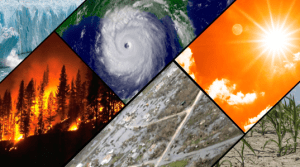
The truth is, this is not as far fetched as one might think. You may be wondering how we got here but for years, many (scientists, professors, politicians and people), saw this coming. No, the pandemic is not a 5G conspiracy, or a plandemic… actually the underlying crisis here is……Climate Change. Scientists worldwide have described climate change as the challenge of our lifetime. Many continue to deny the facts but what can not be denied is that Climate Change is a global issue. Not only are there trends of stronger storm systems, heavy precipitation, extended dry spells and increasing global temperatures, but also rising sea levels (FAO 2006- 2019). It is not alarmism to say that the worldwide changes observed may be irreversible and that the vast majority of the population will be impacted or affected either directly or indirectly. Globally, the consequences of climate change will result in many displacements and many may loose their lives if no changes are made.
Where is the evidence? There are many instances in which the effects of climate change can be found. Here in the Caribbean for example, there were four category 5 hurricanes between the 2017- 2019 period. The trend of stronger storm systems is a constant threat many Caribbean islands have to face annually. In recent years, islands such as Barbuda and the Bahamian islands of Grand Bahama and Abaco were some severely impacted. Many were forced to evacuate and relocate after these catastrophic events. Small Island Developing States (SIDS) i.e. many of the islands and countries of the Caribbean, are particularly at risk to the effects of climate change. Characteristics such as; relative isolation and small land masses. Additionally, dense coastal populations and infrastructure concentrated in these areas make them extremely vulnerable to sea level rise and extreme events. By 2055, many coastal communities could be severely impacted if no changes are made. Just 1 metre of sea level rise could result in the loss of over 1200km2 of land mass and the displacement of over 100,000 people.
What can Caribbean countries do to minimize the impact of climate change? Unfortunately very little, many Caribbean countries have a limited economic base and depend on natural resources, combined with limited financial and technical capacity. Timely adaptation/ adjustment is unlikely. These are the harsh realities that SIDS have to face, that larger countries who are major contributors to climate change continue to ignore. Again I must reiterate, climate change is real and it may just be the true crisis of our time!!
How pandemics happen? When it comes to climate change not only do we have to worry about the visible and physical threats but also invisible threats. It may be difficult to see the linkages between climate change and disease or even understand how viral and bacterial agents are impacted but there is an association. The incidence, distribution and control of disease is influenced by a triad of factors: host (humans, animals, insects), environment and pathogen (disease causing organism). Climate change will influence these factors either directly or indirectly.
Direct effects of Climate change on the triad of factors
- Host – Denser populations/ overcrowding due to decreased land mass and coastal erosion.
- Environment – Irregular temperature fluctuations in addition to periods of heavy rainfall and periods of drought.
- Pathogen– Increased reproduction rate and intensity due to favourable conditions.
What does it all mean? Essentially, densely populated/ overcrowded areas are potential breeding grounds for disease causing organisms, inadvertently making it easier for them to evolve. Generally, pathogens are unpredictable and opportunistic in nature. The rapid cycling between humans and other hosts, such as birds, bats, rats, mice, etc. can result in the emergence of new strains or more robust strains responsible for the prevalence and spread of serious disease. With increasing population density and continuous changes in climate, more and more diseases will be prevalent. When you have clusters of a disease in a community this is classified as an outbreak. An outbreak of a disease once spread to a large enough population and other communities becomes and epidemic. An epidemic is usually localized in one country. Once and epidemic spreads to multiple countries it is classified as a pandemic. In many cases an outbreak does not progress to a pandemic or even an epidemic because systems are in place to prevent this. Institutions such as the WHO and CDC are involved in identifying, documenting, investigating and informing the public of outbreaks and ways to stay safe. One tool commonly used to provide insight into an outbreak is epidemiology.
What is Epidemiology and why is it important? Think of epidemiologists as disease detectives and Epidemiology is the scientific method of investigative problem-solving. Epidemiology is used to get to the root cause of health problems and outbreaks in a community. More specifically this information can be very essential to the epidemiologists, laboratory scientists, statisticians, physicians and other health care providers, and public health professionals in the community. The information provided plays a crucial role in reducing the occurrence of disease. It can tell us, the characteristics of a particular pathogen, the rate of spread, exposure time, location and, the at risk population. Epidemiological data is paramount to targeting and implementing evidence-based control measures to protect the public’s health and safety. With the aid of epidemiological data control measures can be targeted and specific to minimize outbreaks or even more serious events.
Epidemiology and food safety When it comes to epidemiology and food safety they go hand-in-hand. Epidemiology plays a key role in pinpointing outbreaks i.e. unsafe food sources and this reduces widespread food-borne illness. The majority of foodborne illnesses originate from either bacterial or viral sources.
- Viral food borne diseases are important to understand as they frequently cause illness. Norovirus, hepatitis A and Rotavirus are the main contributors to foodborne illness. According to the CDC, Norovirus is the leading cause of foodborne illness world wide. Viral transmission occurs via a living host and in most cases an infected food handler/human host has transmitted the virus to the food through improper handling practices or poor sanitation. While viruses are unable to grow or multiply in food, and the number of viral agents that present serious health affects to humans is low. Viral agents do have characteristics that aid in their ability to adapt, specifically, large population sizes and short generation times. These adaptions could come about due to environmental changes or the immune response of the host. With the current progression of the climate crisis this can mean more resistant and infectious viral foodborne agents.
- Bacterial agents are the other major cause of foodborne illness. Bacterial agents differ significantly from viral agents as these are living organisms. Foodborne bacterial agents are ubiquitous, variant and numerous (> 25 types of pathogenic bacteria; Escherichia Coli variants, Salmonella variants Vibrio Cholerae, Listeria Monocytogenes). These can be found in a variety of environments (water, plants, animals, food, sewerage, soil etc.) including those most extreme (E. Coli & Shigella can be found in the stomach of humans and animals). Environmental changes such as temperature fluctuations, flooding and sea level rise can result in unpredictability and the dispersal efficiency of bacterial agents. Additionally, warm humid conditions are ideal for many types of bacteria, Vibrio Cholerae O1 and O139 is one agent that is commonly found in flooded areas and it is responsible for thousands of deaths worldwide (United States Food and Drug Administration 2012). Microbial evolution in response to stress and changes in water availability are very common and in the event of climate change, there is a high likelihood of bacterial agents adapting to improve survival or efficiency. These factors can influence the virulence and mortality rates of bacterial agents resulting in detriment to human life. Some agents have adapted to produce toxins (E. Coli O157:H7) while others have adopted flagella to become motile (Salmonella spp.).
Climate change is happening now. There are new and more prevalent risks to food animal and plant safety. When looking at the surface it may be hard to see the true effects but the evidence of its impact on the burden of foodborne illness is clear. Specifically, the increasing population, continuous scarcity of clean water, flooding and unpredictable weather conditions and changes in eating habits all can contribute to the increase and spread of foodborne disease. This is a very real threat to the lives of many around the world, especially SIDS. This problem can no longer be disregarded and compounded. Viral evolution and bacterial/ microbial evolution are very real threats. There are hundreds of bacterial agents some of which are already resistant to antibiotics (Salmonella variants), those which have morphed into more dangerous agents (E. Coli and Vibrio Cholerae) in addition to those which have been newly identified. The more information epidemiology data provides, the greater the understanding there is of viral and bacterial foodborne diseases. This reduces the risk factors and provides better chances for human health and life. It is also clear that (Now more than ever), epidemiological data will play a pivotal role in public health protection. Providing the information necessary to reduce the impact of many diseases that may arise as a consequence. If COVID-19 is any indication of the possible threats to come it is evident that we need to be more prepared.
Are we doing enough to change the future today?
References
Center for Disease Control and Prevention. 2012. “CDC.” Principles of Epidemiology in Public Health Practice. https://www.cdc.gov/ophss/csels/dsepd/ss1978/ss1978.pdf.
Feigin, R. D. , Garg, . Renu and Christie, . Andrew Barnett. “Infectious disease.” Encyclopedia Britannica. https://www.britannica.com/science/infectious-disease.
Food and Agriculture Organization . 2006- 2019. “FAO.” Climate Change Implications for Food Safety. http://www.fao.org/3/i0195e/i0195e00.pdf.
Foster, Samuel, Nitin Kumar, Blessing Anonye, Alexandre Almieda, Elisa Viciani, Mark Stares, Matthew Dunn, et al. 2019. “A human gut bacterial genome and culture collection for improved metagenomic analyses.” Nature of Biotechnology – https://www.nature.com/articles/s41587-018-0009-7 186-192.
Kendrovski, Vladimir, and Dragan Gjorgjev. 2012. “Climate Change: Implication for Foodborne Diseases (Salmonella and Food Poisoning Among Humans in R. Macedonia).” In Structure and Function of Food Engineering. Edited, by Ayman Amer Eissa. DOI: 10.5772/46183: https://www.intechopen.com/books/structure-and-function-of-food-engineering/climate-change-implication-for-food-borne-diseases-salmonella-and-food-poisoning-among-humans-in-r-m.
Science Daily. 2018. A new toxin discovered in Cholera bacteria. https://www.sciencedaily.com/releases/2018/06/180625192801.htm.
Simpson, M.C. Scott, D. Harrison, M. Sim, R. Silver, N. O’Keeffe, E. Harrison, S. Taylor, M. Lizcano, G. Rutty, M. Stager, H. Oldham, J. Wilson, M. New, M. Clarke, J. Day, O.J. Fields, N. Georges, J. Waithe, R. McSharry, P.1 (2010) Quantification and Magnitude of Losses and Damages Resulting from the Impacts of Climate Change: Modelling the Transformational Impacts and Costs of Sea Level Rise in the Caribbean (Key Points and Summary for Policy Makers Document), United Nations Development Programme (UNDP), Barbados, West Indies. https://www.uncclearn.org/wp-content/uploads/library/undp88.pdf
Tirado, M.C, R. Clarke, L. A Jaykus, A. McQuatters-Gollop, and J.M Frank. 2010. “Climate Change and Food Safety: A Review.” Food Research International: https://ucanr.edu/datastorefiles/608-149.pdf 1745-1765.
United States Food and Drug Administration. 2012. “U.S FDA- Bad Bug Book Second Edition.” Foodborne Pathogenic Microorganisms and Natural Toxins Handbook. https://www.fda.gov/downloads/Food/FoodborneIllness Contaminants/UCM297627.pdf.
National Oceanic and Atmospheric Administration. 2020. “Climate Change Impacts” https://www.noaa.gov/education/resource-collections/climate/climate-change-impacts
 The Root Cause